
“Damn you, hold up your hands or I’ll shoot!”
That’s what a young man on the porch of Ardon W. Coombs’s house on Mellen Street said to Portland police officer Willard Frith at about 2:30 in the morning on December 20, 1892. Frith didn’t put his hands up. Moments later both men had fired, and one of them was carrying two of the other’s bullets.
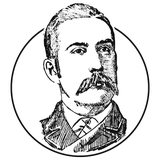
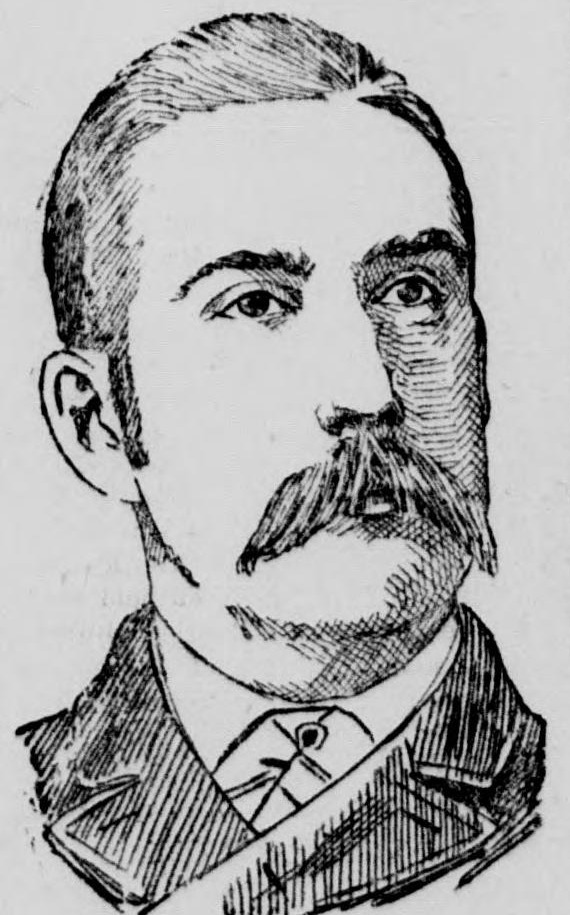
If you’ve noticed our logo, you’ve already seen Frith. He’s the man with the handlebar mustache, and his story is a good one.
A night on Mellen Street
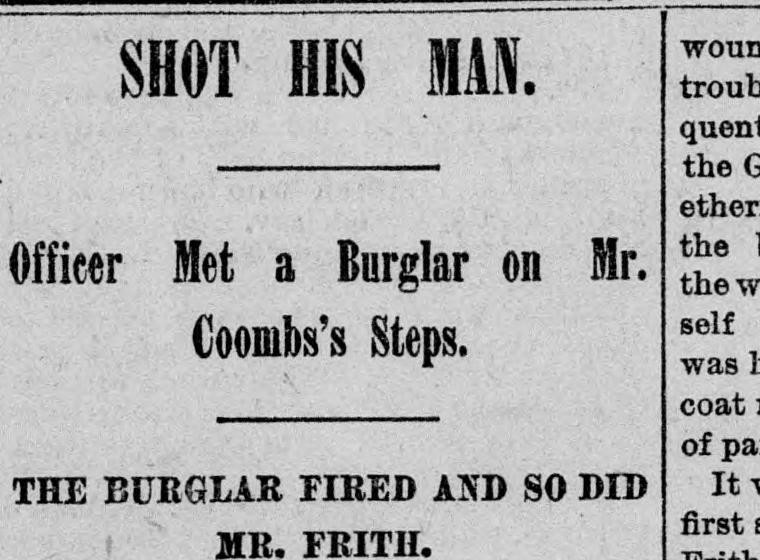
According to the Portland Daily Press, Frith was walking past the corner of Congress and Mellen streets when he heard a strange tapping sound. He started down Mellen Street and spotted a man on the Coombs porch, who had a revolver in his hand and spoke first.
Frith thought the man might be crazy, so he kept his hands down and told him to come down to the sidewalk. Instead the man vaulted the porch railing into the yard, and Frith jumped the fence after him. In the middle of Mellen Street the burglar turned and fired.
Frith felt a sharp pain under his vest. He fired back twice, and both bullets hit, one in the right shoulder and one in the right arm. The burglar dropped his gun and gave up. (When the Press retold the story in 1899, it had Frith firing three times.)
Then came the best part. On the walk to the City Hotel, where Frith called for the patrol wagon, the wounded man tried to give him his plain gold ring as a keepsake. Frith said no thanks.
Frith was sure he’d been shot himself. When he finally opened his clothes, a .32 caliber bullet fell to the floor. It had gone through both layers of his double-breasted overcoat and his underclothes and stopped against his shirt.
The gentleman burglar
The prisoner said his name was Fred Irving, and he turned out to be a strange one. He was staying at the Chadwick House, where he wore gold-bowed spectacles, manicured his nails and dressed like a dandy.
When police searched his room later that day, they found a trunk of clothing, some of it stolen, and a list of leading citizens with notes on how their windows were laid out.
He had taken a job selling sewing machines, and the Press figured he’d used it to case houses. Police also found two essays, one titled “A Plea for a Popular Sonnet Form” and the other “A Study in Bedbugs.”
On December 21, Frith went to visit Irving in his cell, and their chat turned to their guns. Frith remarked that Irving’s pistol didn’t seem capable of doing much damage. Irving explained that he’d thrown away his good revolver after an earlier scrape and spent his money on luxuries instead of buying a new one.
He didn’t plan to fight the charges, either. “I might as well take my dose,” he said.
There was a bonus detail in the coverage. The revolver Frith used that night had belonged to another burglar he’d caught four years earlier. We’ll get to him below.
Twenty years at Thomaston
Irving pleaded guilty to assault with intent to murder Officer Frith. On January 23, 1893, Judge Bonney sentenced him to 20 years at hard labor in the state prison at Thomaston. According to the Press, he didn’t move a muscle. He sat down, brushed a speck of dust off his trousers and checked the time on his gold watch.
That same day two officers from Lynn, Massachusetts, walked into his cell and greeted him as Paul. Before Portland, he had gone by Paul Dennison. Under that name he’d already served nearly six years in the Massachusetts state prison at Charlestown, for an 1883 attack on a coachman in a Dorchester stable.
The Portland papers kept calling him Irving, so we will too.
A poem from prison
You’d think that would be the end of it. Nearly five years later, in November 1897, the Portland Daily Press reported that Irving had written Frith a cheerful letter about prison life, with a poem tucked inside.
The paper said Irving had taken a liking to the officer who shot him. It also called him the black sheep of a well-known Maine family, which doesn’t square with 1893, when the Press said he was believed to be from the Maritime provinces.
The poem was called “A Flight of Fancy,” and in it the prisoner dreams his way over the walls and down to Boston for a shave at Young’s Hotel. Early on he explains why he wants to leave:
This circumscribed residence
Is not unto my taste.
Irving apologized for not writing sooner. His prison pay was 25 cents a month, he explained, and a letter made a big hole in it. He also sent along a wish list of books, including Shakespeare, Trilby, Pepys’ Diary, Kipling’s Barrack-Room Ballads and the Rubaiyat.
How great is that? A man shoots at you, you shoot him twice, and he starts sending you poetry.
Who was Willard Frith?
Willard Frederick Frith was born in Roxbury, Massachusetts, on February 1, 1858. By 1870, 12-year-old Willard was living in Portland with his mother, Phebe, his stepfather Elijah Thompson and a little half-brother named Clarkson.
On November 28, 1878, at 20, he married Lizzie Harrington in Portland (a few of their children’s records spell it Harrigan). He worked in the tin and hardware business until 1881, when he joined the Portland police as a patrolman. By the 1900 census the Friths had six children at home: Eva, Elizabeth, Maude, Alice, Charles and Mildred.
He also found time for politics. The Press noted that he served two terms on the city council from Ward 5, from 1887 to 1889.
The burglar who tried to kill him first
Remember that captured revolver? On the afternoon of July 23, 1888, Frith was eating dinner at his house on Anderson Street when gunfire broke out. Children had spotted a burglar in Thomas Woods’s house near Fox Street, and Officer Hughes was chasing him through the streets, both men emptying their revolvers.
Frith jumped out the window. He spotted a horse and wagon at the curb, climbed in and told the boy driving it to go as hard as he could. He caught up with the burglar at India and Newbury streets and jumped down to grab him.
The man pointed his revolver at Frith’s head and pulled the trigger, but the cartridge didn’t fire. Frith knocked the gun aside and threw him to the ground.
The burglar was Charles Moore, a career housebreaker who went by several other names. He went to the state prison, and his pistol went home with Frith. Four years later it was the gun Frith used on Mellen Street.
Deputy marshal
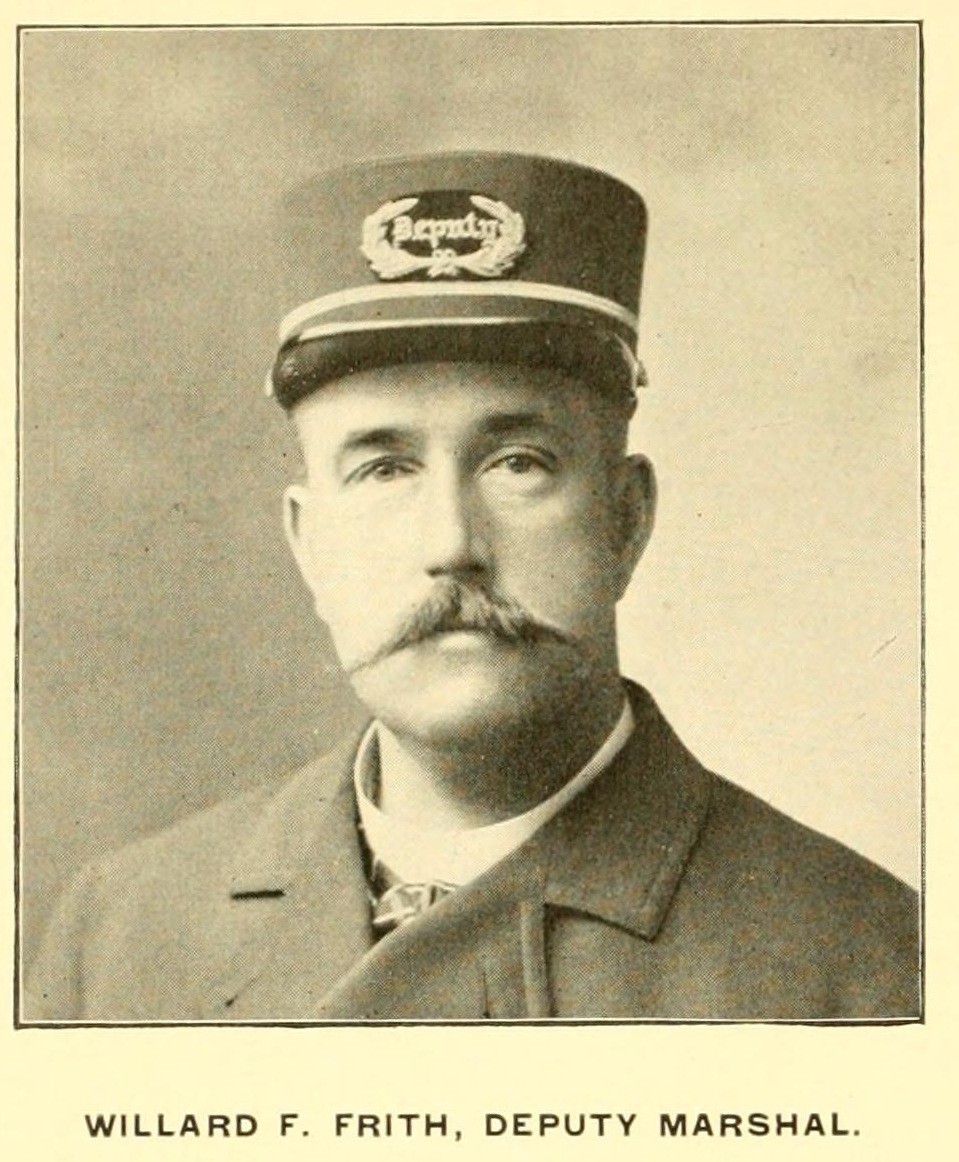
In 1895, after 14 years on the force, Frith left the city police to work for the county as a deputy sheriff under Sheriff Plummer, a job that included liquor raids in a dry state. On March 30, 1899, Mayor Robinson brought him back as one of two deputy marshals under City Marshal George W. Sylvester, the head of the Portland police.
The Press welcomed the appointment and said his arrests had won him a reputation across the state as one of Maine’s best police officers. It also ran his portrait, and that pen-and-ink drawing is the one in our logo.
Shot again at the telephone exchange
On April 24, 1901, a few minutes before 2 in the afternoon, a foreman electrician named George H. Brainard opened fire on his co-workers. It happened at the New England Telephone exchange at the lower end of Exchange Street. (The Kennebec Journal usually spelled his name Brainerd.) The company’s chief electrician, Henry Farnham, was killed, a worker named Earle Buxton also died, and others were badly hurt.
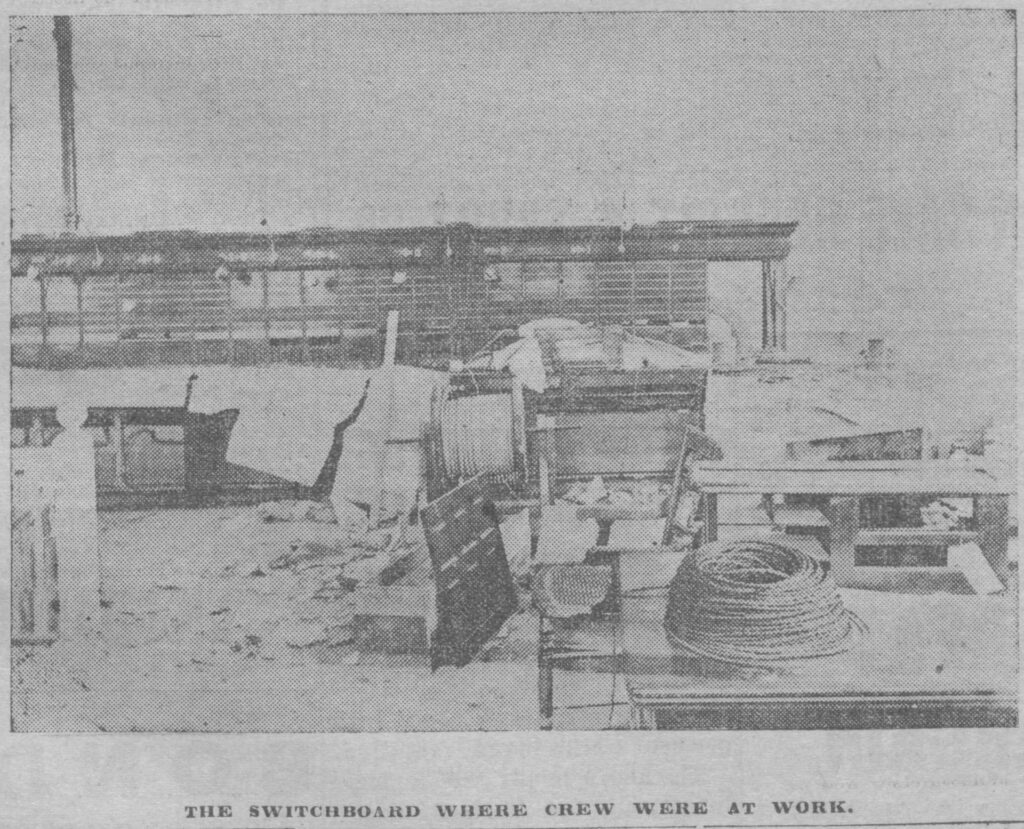

Anyone who tried to go upstairs had been driven back. Frith arrived with two officers and went up the stairs first.
In his own account to the Press, he met Brainard on a landing. Brainard said hello and shook his hand, and that’s when Frith saw the revolver in his other hand. Frith lunged for it, and they struggled on the stairs.
Brainard fired from a few inches away. The bullet went through Frith’s coat, vest and trousers, then tore through a fire alarm card, two or three small lodge books and a mirror he was carrying. He came away with a bruise about four inches around and handed his prisoner to the officers.
That October, at Brainard’s murder trial, Frith described their talk in the cell room afterward. “You nearly got me that time, didn’t you?” Frith had asked, and Brainard told him he was sorry he had.
A gold medal
In May 1901 the city council passed a resolution noting that Frith had “on three different occasions faced death” doing his job, and called for a gold medal. Not everyone agreed. A couple of aldermen thought a vote of thanks was enough, and after some back and forth the council left it to the mayor to get the medal.
An attempt to give silver medals to the two officers who had gone in with him failed by a single vote.
On July 1, 1901, Mayor Boothby presented the medal in front of the city government. Frith thanked him but, as the Kennebec Journal put it, “did not attempt to make a speech.” He had already turned down a public collection of money for him after the Brainard shooting.
Later years
By the end of 1905 Frith’s time as deputy marshal was over, and Mayor Clifford named William H. Bryson to the post. Under the rules, a retired deputy couldn’t rejoin the force without taking the civil service exam and waiting his turn. So the mayor worked out a plan to keep Frith at headquarters as a special officer in plain clothes. He was still working cases in 1906.
In 1920 he was living with his daughter Elizabeth Reynolds and her family in Portland. He died in June 1923, on the 20th according to his grave record or the 21st according to the Kennebec Journal, and he’s buried in Evergreen Cemetery.
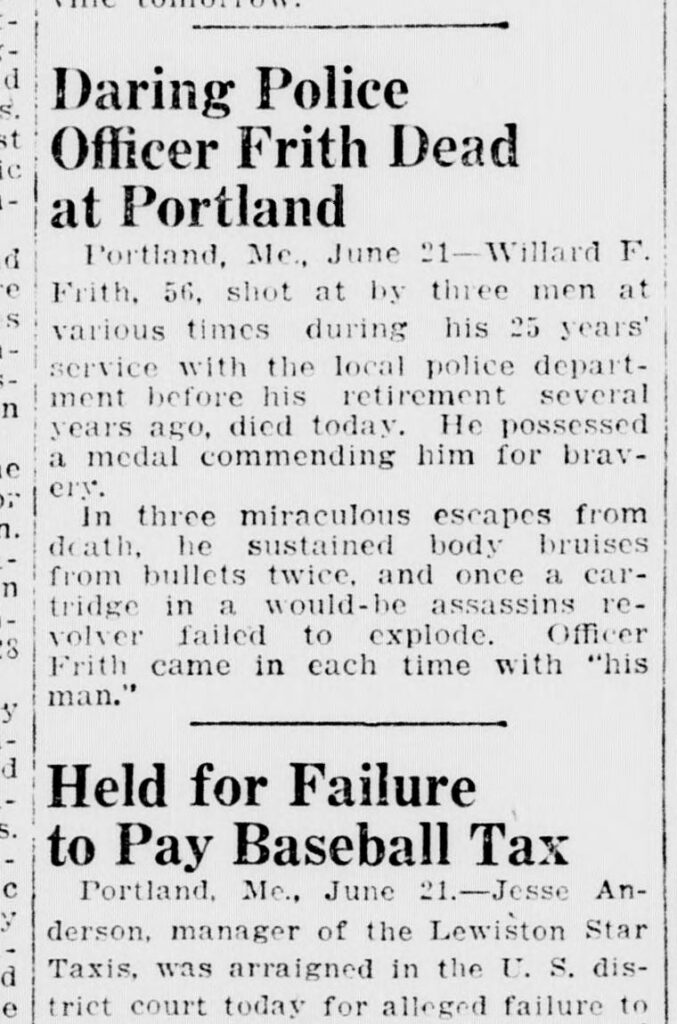
The Kennebec Journal ran a short death notice. It got his age wrong, printing 56 when he was 65, but it remembered the two bullets and the dud cartridge, and it said he came in each time with “his man.”
Over at our sister site, the logo is another hard-working cop. You can read the story of Officer Sprinkle, the policeman in the Ghosts of DC logo.
A patrolman who was shot at three times, kept the gun of the man who tried to kill him and got poetry from the man he shot is exactly the kind of ghost this site is for. That’s why I was inspired to make him our logo.
Lost Maine stories, in your inbox.
The newest story, plus a few from the archive.
Free. Unsubscribe anytime.
We use AI to help research, write and edit stories across our sites. Here’s how we use AI.Suggest a correction